Mar 26, 2026
mins read

When a new dark mark appears, it is tempting to search for the strongest brightening serum, order several active ingredients and introduce everything at once.
Unfortunately, pigmentation is rarely that simple.
Some types of pigmentation may gradually improve with consistent skincare and sun protection. Others need a more personalised approach, and the first step is understanding what may be causing the discolouration.
The safest question is not simply, “Which product removes pigmentation?” It is, “What type of pigmentation am I trying to improve?”
What is hyperpigmentation?
Hyperpigmentation is a general term for areas of skin that appear darker than the surrounding skin. It occurs when the skin produces or holds more melanin, the pigment responsible for skin colour.
However, hyperpigmentation is not one single condition. Common examples include:
Sunspots and age spots
Melasma
Post-inflammatory hyperpigmentation after acne or irritation
Freckles
Pigmentation associated with hormonal changes
General uneven-looking skin tone
Because the causes are different, a product that helps one type of pigmentation may do very little for another.
Can pigmentation be treated at home?
Some pigmentation can be managed at home, particularly when it is linked to sun exposure, mild post-inflammatory marks or general uneven skin tone.
Home skincare normally works gradually. Its role may be to reduce further darkening, support normal skin renewal and improve the appearance of existing discolouration over time.
It is important to keep expectations realistic. Skincare cannot guarantee that pigmentation will disappear, and deeper or more persistent pigmentation may require a professional treatment plan.
Sun protection comes first
Before buying another brightening serum, look at your sun protection.
Ultraviolet exposure can make pigmentation darker and encourage it to return. Visible light may also contribute to certain pigmentation concerns, particularly melasma and post-inflammatory hyperpigmentation.
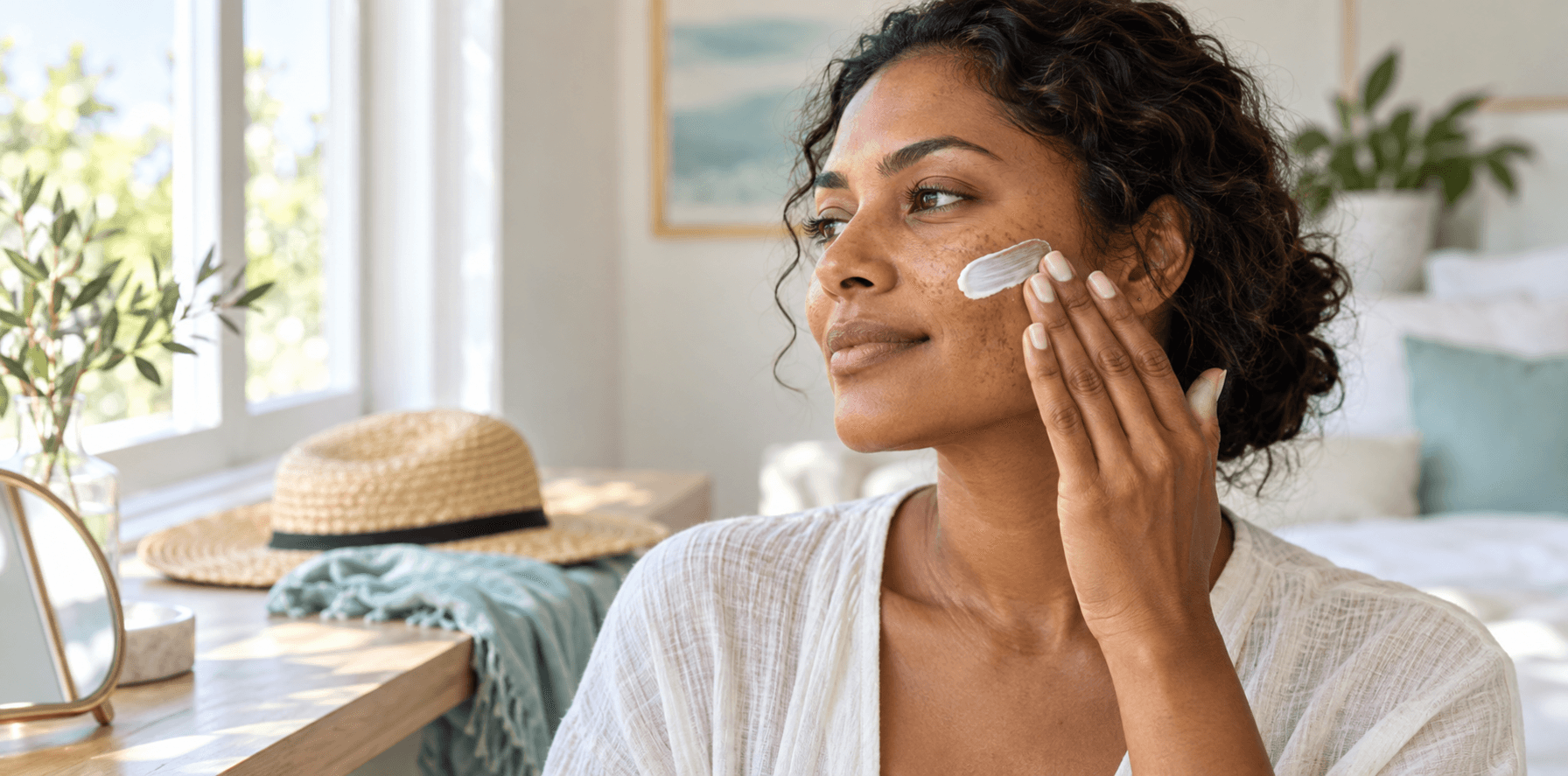
Use a broad-spectrum sunscreen with at least SPF 30 and good UVA protection. Apply it generously and follow the manufacturer’s instructions regarding reapplication, particularly when spending time outdoors, sweating or travelling somewhere sunny.
A tinted sunscreen containing iron oxides may provide additional protection against visible light and can be particularly useful for some people with melasma or pigmentation-prone skin.
Sunscreen does not remove pigmentation overnight, but without consistent protection, even a carefully selected skincare routine may struggle to make progress.
Which skincare ingredients may help?
Several ingredients are commonly used to support a brighter and more even-looking skin tone. The right choice depends on your skin, the type of pigmentation and the other products you already use.

Niacinamide
Niacinamide is a form of vitamin B3 commonly found in serums and moisturisers. It may support the skin barrier and gradually improve the appearance of uneven skin tone.
It is often well tolerated, but higher-strength products can still cause irritation for some people. A stronger percentage is not automatically more effective or more suitable.
Vitamin C
Topical vitamin C is an antioxidant that may help brighten the appearance of the skin and support protection against environmental stress.
Vitamin C products vary considerably in their strength, stability and formulation. If a product repeatedly stings, causes redness or irritates your skin, continuing to use it is unlikely to improve your pigmentation.
Azelaic acid
Azelaic acid may help with post-inflammatory marks, acne-related pigmentation and some cases of melasma. It can also be useful for people managing blemishes alongside uneven skin tone.
Temporary tingling can occur, but persistent burning, itching, swelling or worsening redness may mean the product is not suitable for your skin.
Kojic acid
Kojic acid works by affecting an enzyme involved in melanin production. It is included in some products designed for dark spots and uneven pigmentation.
However, kojic acid is not automatically gentle because it comes from a natural source. It can cause irritation or an allergic reaction in some people. Introduce it cautiously, follow the product instructions and stop using it if significant irritation develops.
Retinoids
Retinoids support skin-cell turnover and may gradually improve some forms of uneven pigmentation. They can also cause dryness, peeling and irritation, particularly when introduced too quickly or combined with several exfoliating ingredients.
Retinoids are not appropriate for everyone. Some should be avoided during pregnancy, and stronger forms may require medical guidance. Check the instructions for your particular product and ask an appropriate healthcare professional if you are uncertain.
Liquorice root and other botanical extracts
Some carefully formulated skincare products contain liquorice root, green tea or other plant-derived extracts. These may provide antioxidant, soothing or brightening support.
The important words are “carefully formulated.” Applying raw plants, food ingredients or homemade mixtures to the face is not the same as using a properly formulated skincare product.
Natural ingredients can still cause irritation, allergies and post-inflammatory pigmentation.
What about facial oils?
Rosehip, jojoba and argan oils can help some people reduce dryness and support the skin barrier. They may make dry skin feel softer and more comfortable.
However, facial oils are not reliable treatments for established pigmentation, and they do not replace sunscreen.
They may also be unsuitable for certain acne-prone or congestion-prone skins. Whether an oil is appropriate depends on the individual and the complete formulation, not simply on the fact that it is natural.
Why irritation can make pigmentation worse
When the skin becomes inflamed, it may produce additional pigment as it heals. This is known as post-inflammatory hyperpigmentation and is particularly common in medium to deep skin tones.
Trying to fade pigmentation too aggressively can therefore create more of the problem you are attempting to treat.
Be cautious about combining several active products, such as exfoliating acids, retinoids, vitamin C and kojic acid, without knowing whether the combination is suitable.
A routine does not need to tingle, peel or burn to be effective.
How to introduce a pigmentation product safely
When introducing a new active skincare product:
Read and follow the manufacturer’s instructions
Patch test it as directed before applying it more widely
Introduce one new product at a time
Start gradually rather than using it every day immediately
Avoid combining several strong active ingredients at once
Keep the rest of your routine gentle and supportive
Use consistent sun protection
Stop using the product if you experience persistent burning, swelling, blistering, a rash or significant irritation

If your skin is already irritated, inflamed or recovering from a procedure, ask for professional advice before introducing another active ingredient.
Pregnancy, breastfeeding, prescription medication and existing skin conditions may also affect which ingredients are appropriate for you.
Home remedies I would avoid
I would not recommend applying lemon juice, baking soda, toothpaste, undiluted essential oils or homemade acid mixtures to pigmentation.
These substances can irritate the skin, damage the skin barrier and potentially leave darker post-inflammatory marks.
A product being natural or commonly found at home does not necessarily make it suitable for facial skin.
When is professional treatment worth considering?
If a consistent and appropriate home routine is not giving you the improvement you expected, a professional skin consultation can help you understand what may be realistically managed.
Depending on the pigmentation and your suitability, options may include professional skincare, superficial chemical peels, microneedling or laser pigmentation treatment.
Laser is not appropriate for every type of pigmentation. Melasma, for example, needs particularly careful assessment because unsuitable treatment or excessive heat may make it worse.
During a consultation, I assess the pigmentation, your skin, medical history, sun exposure and treatment goals to decide whether it appears suitable for the cosmetic treatments I provide. If a mark is unusual or falls outside my professional scope, I may recommend having it medically assessed before proceeding.
A professional consultation should consider:
The appearance and likely cause of the pigmentation
Your skin tone and response to inflammation
Recent tanning and normal sun exposure
Your current skincare routine
Medications and medical history
Pregnancy or breastfeeding
Previous treatments
Upcoming holidays
Sometimes the most suitable recommendation is professional treatment. Sometimes it is a consistent home routine, better sun protection or simply giving the skin time to recover.
The bottom line
Yes, some pigmentation can be supported at home, but success depends on understanding the concern, protecting the skin from further sun exposure and choosing products that your skin can tolerate.
More products, stronger percentages and aggressive exfoliation do not necessarily produce faster results. They can sometimes create additional irritation and pigmentation.
Start with sun protection, introduce suitable ingredients gradually and be patient. Pigmentation usually takes time to improve, even with a carefully planned routine.
Roxane Laser Studio is based in Penge, near Sydenham and Beckenham, offering personalised laser and advanced skin treatments in South East London.
Not sure what approach is right for your pigmentation? Book a consultation for an individual assessment.